
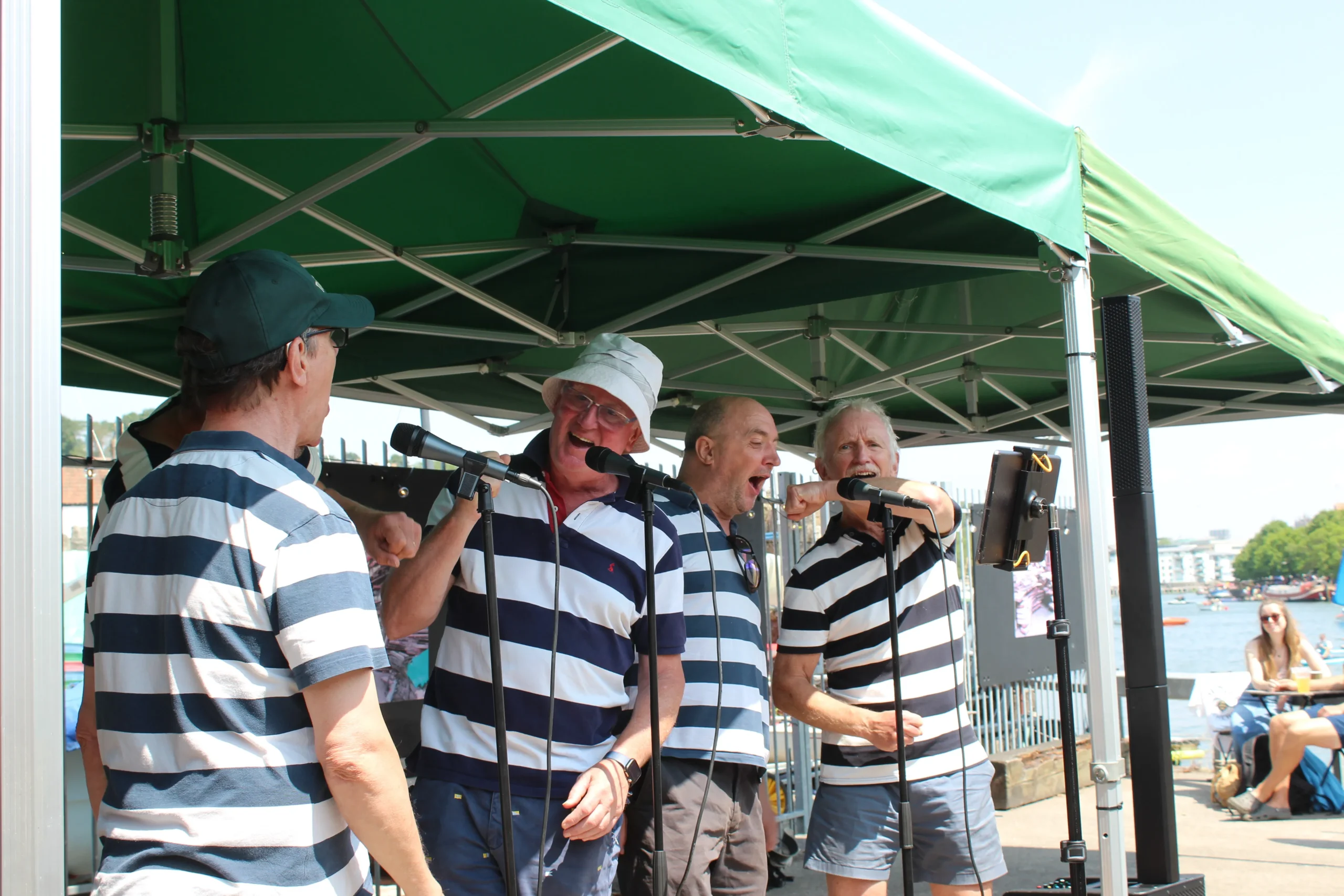
As Underfall Yard puts together the final preparations for the Bristol Sea Shanty Shout, let us take a look back at how sea shanties have been intertwined with the history of our famous docks and Floating Harbour. Over the past 15 years, there has been a surge in popularity in the city, creating a fantastic merge of the traditional tales and stories with modern entertainment.
“As I was a-walking down Paradise Street
To me way hey blow the man down”
Anyone who has ever sung a sea shanty will know those lines. Paradise Street is in Liverpool, not far from the Albert Dock. Shantymen and singers of sea songs were fond of introducing references to the ship’s home port, so Liverpool gets plenty of mentions. Maggie May is “cruising up and down old Canning Place”. In Liverpool Judies the ship sails into Bramley Moore Dock, now better known as the site of Everton’s new stadium.
Oddly, there are far fewer traditional sea songs and shanties about Bristol. Shantyman and song collector Stan Hugill records one, a capstan song called Aboard the Kangaroo, sometimes referred to as the Bristol Shanty.[1] Collected from a Bristol seaman, it is a comic song about a sailor who returns from sea to find his sweetheart married to another. The chorus goes; –
“I never thought she would be false, or ever prove untrue,
As we sailed away from Bristol quay on board of the Kangaroo.”
There is even a reference to “Be’minster Down” in one version. The source turns out to be a music hall song, published in 1856, which does not mention Bristol.
Another shanty adapted from a published source is Three Sailors of Bristol City. This is a version of WM Thackeray’s poem Little Billee. It is a comic song about cannibalism (yes, really) in which the intended victim escapes and his would-be murderers get their just deserts. According to Hugill it was used as a pump shanty.
Folk song collectors came to the West Country in the early 20th century. Cecil Sharp recorded versions of several well-known shanties in Bristol – Whisky-o, Dead Horse, Drunken Sailor and Haul Away Joe among them. A song called The Bold Pirate was collected in Dorset.[2] It begins “’Twas on the 12th of March, my boys, from Bristol we set sail.” It tells of the crew of a Bristol ship heroically overcoming a marauding force of pirates and making off with their gold. They finally berth “’longside of Bristol quay” with their spoils and vow to go to sea no more.
History may not have left us many Bristol sea songs, but local shanty crews have taken up the slack. The Longest Johns celebrate Bristol harbourside institution the Llandogger Trow.[3] In shanty tradition, they have adapted a Canadian song The Last Saskatchewan Pirate.[4] to their home port. The Last Bristolian Pirate is a farmer- turned- pirate who has not quite got the hang of his change of trade. His pillaging focuses on “stealing wheat and barley and all the other grains”
Shipshape and Bristol Fashion by Celtic pirate folk rocker Kale A Deane[5] is firmly rooted in Bristol lore. The title refers to the well-known expression about battening down the cargo for safety in the days when the harbour was tidal. The lyrics mention the perils of navigating the passage “from Avon Gorge to Underfall.” The song has been adopted by the Port of Bristol Shanty Crew as the theme song to their podcast of the same name.
Ian (Nobby) Dye, formerly of The Harry Browns and a founder member of the Port of Bristol Shanty Crew, has done his bit to put Bristol on the sea song map. He has written several songs, including Juno and Welshback Quay, drawing on his experiences of watching shipping in the harbour. Perhaps the best known is The Corncrake.[6] This was a General Steam Navigation Company vessel which plied a regular route between Bristol and Bordeau “loaded down with brandy o” for Bristol wine merchants. In the song, she passes “Hotwells and the Cumberland Lock” on her way to the City Docks.
What these contemporary songs have in common with traditional shanties is choruses that demand audience participation. One of the joys of a shanty set is singing in a crowd. Shanties and sea songs will continue to evolve and find new audiences, and hopefully songs will continue to be written celebrating the distinctive maritime heritage of Bristol.
Thank you to Elaine, one of our great writing volunteers, for writing this essay. If you want to get involved with singing some shanties, join us for free on the 19th and 20th of September for the 2026 edition of The Bristol Sea Shanty Shout.
Have a look at our lineup here.
[1] Stan Hugill; “Shanties from the Seven Seas” Routledge and Keegan Paul 1961
[2] English Folk Dance and Song Society Bristol Folk Song Pack
[3] The Llandoger, Robbie Sattin 2024
[4] The Last Saskatchewan Pirate, The Arrogant Worms 1992.
[5] Kale A. Deane – Shipshape & Bristol Fashion – YouTube
[6] From Bristol to the Seas: Unpacking the ‘Corncrake’ Shanty